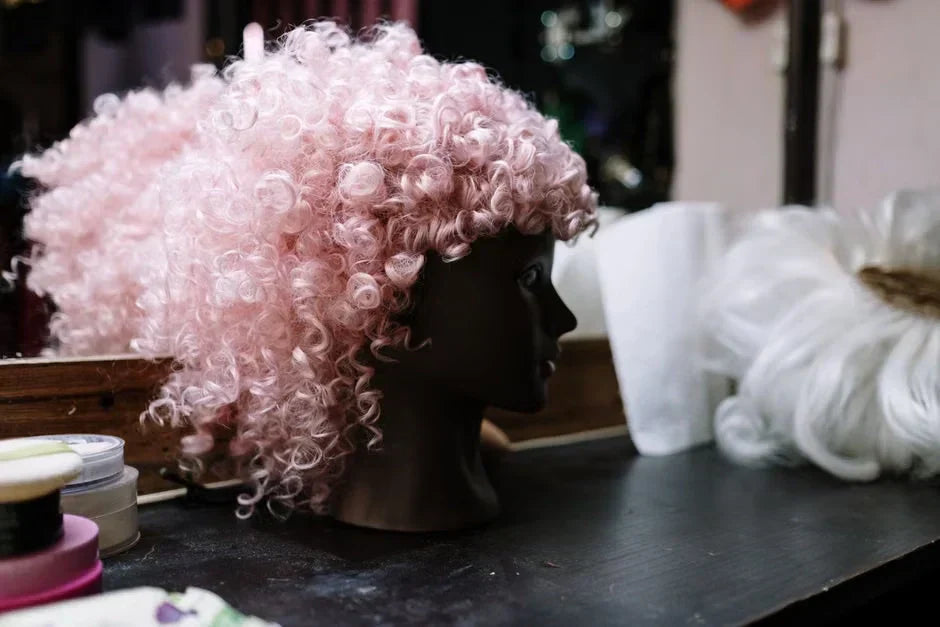

In humid, bug-prone parts of Europe, wigs go mouldy or get damaged not because they’re dirty, but because of high humidity, incorrect storage, and (in some homes) insects. The solution is simple: stop air-drying, use sealed storage with silica gel, and give your wig a quick brush after each wear. Avoid mothballs and scented sachets — they can backfire in damp conditions. None of this is expensive or time-consuming, and it will significantly extend your wig’s life.
If you’re in any of these areas, this guide is for you:
-
Most of the UK
-
The Netherlands, Belgium, Luxembourg
-
Northwest France (Normandy, Brittany, the Paris basin)
-
Western Germany (North Rhine-Westphalia, Rhineland)
-
Coastal Nordic areas (Denmark, southern Norway, southern Sweden)
-
Ireland
These places share the same challenges: high humidity year-round, long rainy seasons, cold and poorly ventilated winters, and lots of small insects indoors.If you’re in southern Europe (inland Spain, southern Italy, Greece), conditions are much better — you can take a more relaxed approach, but the basic principles still help
Does any of this sound familiar?
1. Your wig just won’t dry properly after washing
You leave it out for two days. The outside feels dry, but the inside of the wig cap is still damp. You put it away, and next time you open the box, there’s mould.
2.You’ve barely worn it, and it’s gone mouldy anyway
You haven’t washed it or worn it much. It was just sitting in a box. Then one day you open it, and the mould has appeared on its own.
3.The ends look chewed or frayed
The tips of the wig or the edges of the fringe have uneven, broken strands — like something’s been nibbling them.
4.It’s fine in winter, but spring and autumn are a disaster
Your wig survives the winter without issues. Then the heating goes off, the damp comes back, and suddenly it’s mouldy.
None of this happens because you’re lazy or didn’t clean it properly. It’s because of the humidity, how you’re storing it, and (in some homes) insects. In other words: it’s not your fault. No one’s told you how to deal with this climate before.
Four things that actually work
1. Stop air-drying. Use a hairdryer.
After washing your wig and patting out the excess water, take a hairdryer — cold setting only (heat damages synthetic fibres). Start from the inside, focusing on the wig cap, the roots, and any parting lines. Put your hand inside the cap while you dry it: if it feels cool, there’s still moisture evaporating. Keep going until the whole cap feels completely dry — no coolness, no dampness when you press it.
This takes about 5–10 minutes, depending on how thick the wig is. Don’t rush it. Don’t settle for “that’s probably fine.” We’ve looked at lots of returned wigs, and mould almost always starts inside the cap — you can’t see it from the outside until it’s too late.
Adjust for the season:
-
Winter (with heating on) – Put the wig near a radiator (not touching, about 10cm away) to pre-dry it, then finish with the hairdryer. The heating already lowers indoor humidity, so this saves effort.
-
Spring/autumn (no heating, rainy) – Just use the hairdryer. If you have a dehumidifier or an AC with a dry mode, run that for an hour after drying.
-
Summer – In many parts of Europe, summer is actually less humid than winter. Drying is easier, but the rule stays the same: no air-drying.
One more thing: If you think “it’s not that humid today, I can just air-dry it” — that’s exactly when problems start. At 60% humidity, the air feels pretty dry to you, but it’s still wet enough for a wig cap to slowly absorb moisture. Don’t trust your skin. Trust the hairdryer.
2. Sealed storage + a moisture absorber
Get a container that seals properly. You don’t need an expensive specialist box. Standard storage boxes work fine: IKEA’s 365+ range (the ones with a rubber seal), Action boxes, TEDI or Flying Tiger containers, or even a ziplock bag from the supermarket. What matters is that it keeps outside air out.
Then add silica gel — the same stuff you find in shoeboxes. You can buy it in supermarkets (laundry aisle), hardware stores, or Amazon. Get the reusable kind with colour-changing beads. When they change colour, you dry them out in a microwave or low oven, and they’re ready to use again.
Put the wig inside, close the lid, and store it in your living space. Not in a basement (too damp), not in an attic (temperature changes cause condensation), not pressed against a wall (walls can feel damp), and not on the floor (moisture settles low). A shelf or table in a normal room is perfect.
3. Keep bugs out with a box — not chemicals
This is the step people get wrong most often, because “I should put something in there” feels like the right instinct. But a sealed box is genuinely enough. Insects can’t get through it. They don’t teleport. They crawl in through gaps. No gaps, no bugs. That’s it.
You don’t need mothballs, lavender sachets, or anti-insect discs inside the box. If you really want extra peace of mind, put them outside the box — on the shelf next to it — but not in direct contact with the wig.
4. Don’t leave food for mould or insects
After each wear, take one minute to do this: hang the wig somewhere in your room (not in the bathroom, not near a window), and run a wide-tooth comb through it from top to bottom. You’re not styling it — you’re just removing dust, grease, and loose skin flakes. That alone removes most of the “food” that mould and insects are after.
If you used styling products (hairspray, wax, gel): these are organic and attract moisture. Brush them out the same day you wear the wig. Ideally, wipe the strands lightly with a slightly damp cloth (avoid the cap). Don’t leave styling products in overnight, and definitely don’t store the wig with them still in.
Who we are and why we wrote this
Every piece of advice here comes from the same place: someone tried it, and it worked. Or someone didn’t, and their wig got ruined.
We’ll keep updating this guide. If you try these methods and still have problems — or you run into a type of damage we haven’t mentioned — let us know. It might help someone else.
FAQ
Q1: I live in a flat and don’t have a dehumidifier. What do I do?
You don’t need one. A hairdryer (cold setting) plus a sealed box with silica gel is enough. A dehumidifier helps, but it’s optional.
Q2: I have cats/dogs. Are these methods safe?
Yes. The silica gel stays inside a sealed box, so pets can’t get to it. The hairdryer is on cold, so no burn risk. And you’re not using mothballs or scented sachets, which are the things that can actually be harmful to pets.
Q3: I rent a small flat and don’t have space for lots of storage boxes. Any simpler option?
Yes. Use a ziplock bag instead of a box. Put a small silica gel pack inside, seal it, and tuck it on a shelf in your wardrobe (not on the floor). Takes almost no space and is easy to move when you relocate.
Q4: Can I use anti-insect spray from the supermarket directly on my wig?
Better not. Most of those sprays contain alcohol or other chemicals that can damage synthetic fibres — making the wig stiff or discoloured. Physical protection (a sealed box) is safer and more effective.
Q5: I don’t have insects at home. Do I still need to seal my wig?
Yes — because the main point of sealing is to block humidity, not insects. Even without any bugs, high humidity alone will cause mould, musty smells, and that weird sticky feeling. The box and silica gel are for moisture control. Bug prevention is a bonus.
Q6: Do you sell drying agents or storage boxes?
No. You can find them in any supermarket, hardware store, or on Amazon for a few euros. We just make wigs. We just tell you what works.