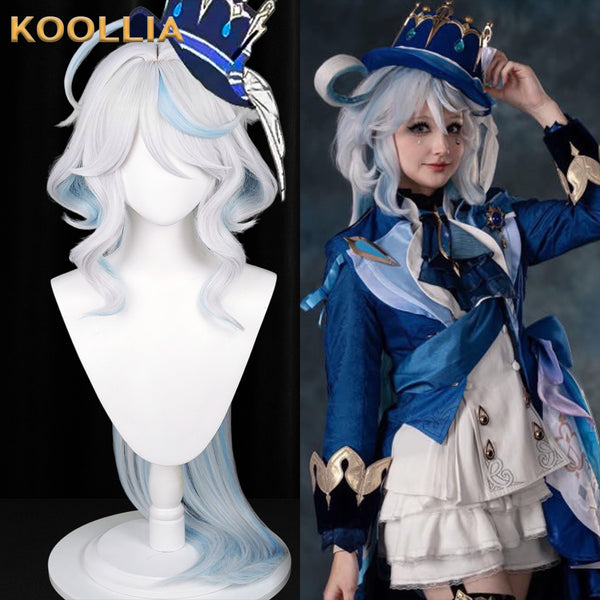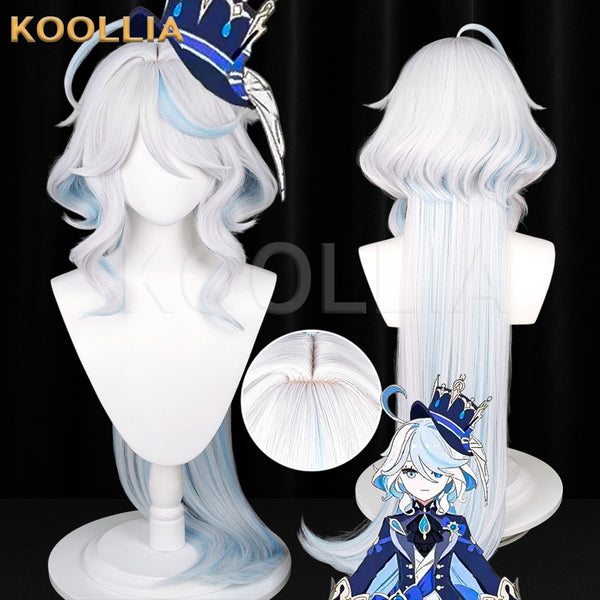

Blue anime wig colors can be difficult to judge online, especially when a character’s hair changes between cool blue, gray, and lavender under different lighting. Mahito from Jujutsu Kaisen is a good example. His hair is not a bright cartoon blue. It is better understood as a muted blue-gray with a slightly cool tone.
This guide explains how to choose a suitable color, what wig features matter, and how to create Mahito’s long, separated hairstyle without making it look stiff or overloaded with product.
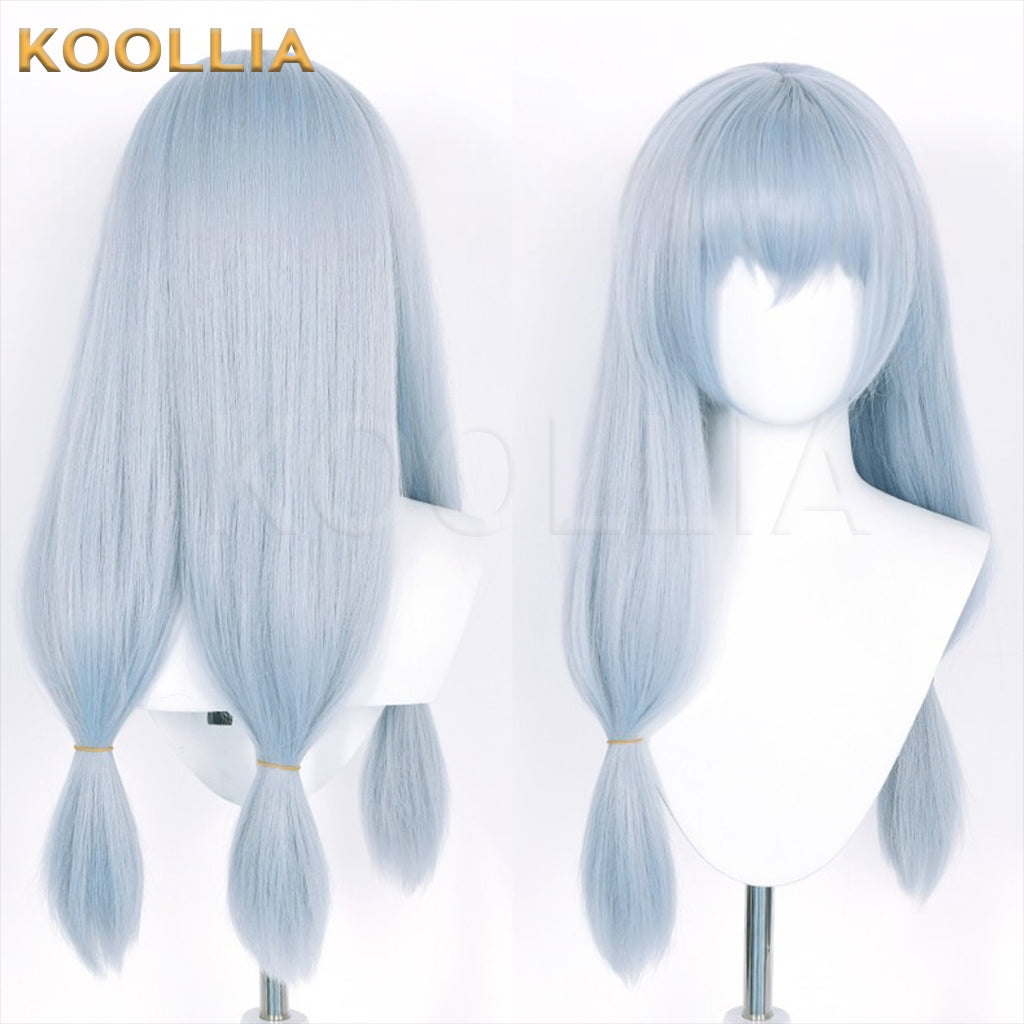
What Color Is Mahito’s Hair?
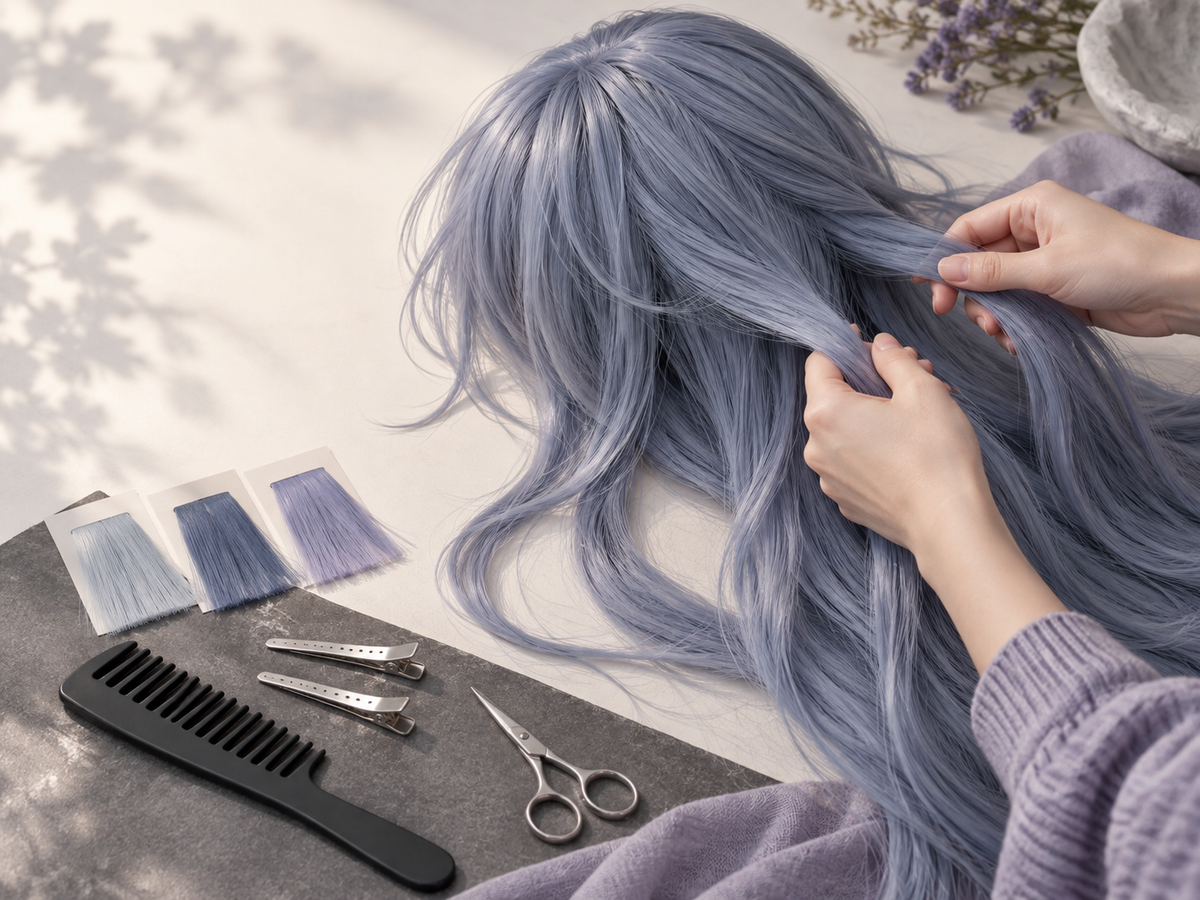
Mahito’s hair is usually shown as a pale blue-gray. Depending on the scene, it can also appear silver-blue, dusty blue, or slightly lavender. This variation is caused by lighting, shadows, surrounding colors, and differences between animation and promotional artwork.
The safest choice is a desaturated blue anime wig rather than a vivid royal-blue or turquoise wig. A small amount of gray in the color helps the hairstyle look closer to the character and prevents it from becoming too bright in photographs.
Before choosing a wig, compare it with several images from the anime and the official character artwork. Do not rely on a single screenshot, because indoor scenes and color filters can make the same hair look very different.
Why the Color Looks Different in Photos
Synthetic fibers reflect light more strongly than natural hair. A blue-gray wig may appear pale silver in direct sunlight, cool blue under white LEDs, and slightly purple under warm indoor lighting.
If possible, check customer photos or photograph the wig under the same lighting you plan to use at an event. For photography, a muted shade is usually easier to correct than an intensely saturated blue.
How to Choose a Blue Anime Wig for Mahito
Color matters, but it is only one part of the result. Length, fiber density, cap fit, and the way the wig responds to styling will affect the finished shape.
1. Choose a Muted Blue-Gray Shade
A generic blue wig costume may be too bright for this character. Look for descriptions such as blue-gray, dusty blue, pale denim blue, silver-blue, or muted slate blue.
Avoid relying entirely on product names. Two wigs described as “light blue” can look completely different when placed side by side. Product photographs showing the fibers in neutral daylight are more useful than color names alone.
2. Start with Enough Length
A long blue wig gives you room to form the separated lower sections without exposing short fibers underneath. It is easier to remove extra length than to correct a wig that is already too short.
The back should reach comfortably past the shoulders before styling. The front also needs enough fiber for soft, uneven bangs and longer pieces around the face.
3. Look for Manageable Density
A very thin wig can show the cap when the hair is divided. An extremely heavy wig, however, may be uncomfortable and difficult to separate into controlled sections.
Choose medium or full density with enough coverage around the crown and back. Listings sometimes call this format a “blue long hair wig,” but the photos and construction details are more important than the wording used in the title.
4. Check the Fiber Before Applying Heat
Only apply heat if the product description clearly states that the fibers are heat resistant. Even then, test the lowest practical temperature on a hidden strand first. Synthetic fibers can permanently curl, flatten, or melt when exposed to excessive heat.
If you are new to cutting or shaping synthetic hair, review this beginner guide to styling a cosplay wig before starting.
How to Style a Blue Anime Wig for Mahito
Mahito’s hairstyle looks loose, but it still needs structure. The goal is to create controlled separation while keeping the surface soft and slightly imperfect.
Step 1: Prepare the Wig
Place the wig securely on a wig head. Gently detangle it from the ends upward with a wide-tooth comb or a brush designed for synthetic hair.
Do not begin by pulling a brush from the roots to the ends. That can tighten knots and stretch the fibers.
Step 2: Check the Length Before Cutting
Put the wig on once before making permanent cuts. Mark the approximate position of the bangs, side pieces, shoulders, and lower sections.
Remember that styled fibers often sit higher and look shorter than straight fibers. Leave more length than you think you need during the first cut.
Step 3: Divide the Main Sections
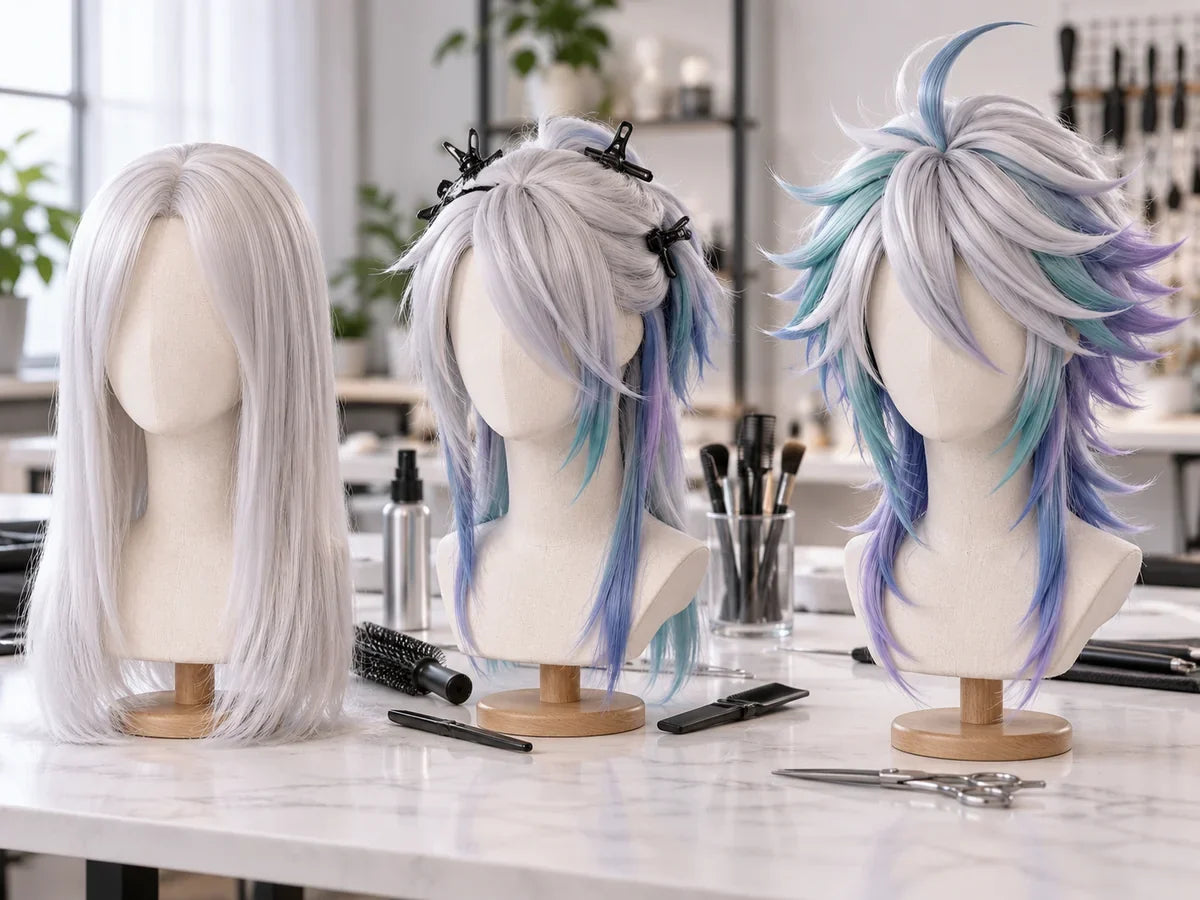
Use clips or loose hair ties to divide the back of the wig into several uneven sections. Refer to official artwork to check their direction and placement.
Avoid making every section identical. Slight differences in size help the hairstyle look more organic and closer to the character’s design.
Step 4: Add Hidden Volume
If the wig lies completely flat, add a small amount of texture underneath the top layer. Light crimping or gentle backcombing can create support without making the visible surface look rough.
Keep the outer fibers smooth enough to catch light cleanly. The hidden texture should support the shape, not become the main visual feature.
Step 5: Shape the Bangs Gradually
Separate the front into small sections and trim with the scissors pointing upward. This creates softer ends than cutting straight across.
Work slowly and alternate between both sides. Mahito’s fringe should frame the face without becoming a heavy, perfectly symmetrical curtain.
Step 6: Form the Lower Sections
Gather the longer back pieces into loose, separated sections. Use clear elastics or thread where support is needed, then cover the fastening points with nearby fibers.
Apply styling product in light layers. Too much glue or spray can darken the color, create visible flakes, and make the hair look rigid.
Step 7: Check the Wig From Every Angle
Try on the wig and take photographs from the front, sides, and back. A shape that looks balanced on a wig stand may sit differently once worn.
Adjust the face-framing pieces last. Keep them clear of your eyes and make sure the cap remains secure when you turn your head.
A Practical Mahito Wig Starting Point
If you do not want to search for a completely generic base, this Mahito blue-gray cosplay wig already provides the relevant color and length for the character.
It is a basic, unstyled wig rather than a finished ready-to-wear hairstyle. That distinction is important: you should expect to trim the bangs, arrange the sections, and add your own shaping. Starting with the correct color and length simply reduces the amount of structural work required.
For more character-specific comparisons, the Jujutsu Kaisen wig guide explains how different hairstyles in the series require different base shapes and styling methods.
Common Blue Anime Wig Styling Mistakes
Choosing a Blue That Is Too Bright
Bright cyan or royal blue can overpower the costume and look even more saturated under convention lighting. A softer blue-gray is usually more forgiving.
Cutting the Wig Too Short at the Start
Always leave extra length during the first trim. You can shorten a section later, but replacing removed fiber is much more difficult.
Using Too Much Styling Product
Heavy product can create a hard shell and remove the natural movement that makes the hairstyle recognizable. Build support in thin layers and allow each layer to dry before adding more.
Ignoring the Back of the Wig
Mahito’s long sections are visible from several angles. Check the back with a mirror or camera so the cap, elastics, and rough interior texture remain hidden.
Copying One Reference Image Exactly
Hair proportions change slightly between scenes and illustrations. Use several references to identify the features that remain consistent: muted color, long length, loose divisions, and irregular face-framing pieces.
Blue Anime Wig FAQ
Is Mahito’s hair blue or gray?
It is best described as pale blue-gray. In some scenes it looks more silver, while in others the blue or lavender undertone is more visible.
Can I use a silver wig for Mahito?
A cool silver wig may work under blue lighting, but it can look too neutral in daylight. A muted blue-gray base usually stays closer to the character across different environments.
How long should a Mahito wig be?
Choose a wig that reaches past the shoulders before styling. Extra length gives you room to create the lower sections and correct uneven cuts.
Does the wig need to be pre-styled?
No. A basic long wig works if you are comfortable cutting and shaping it. A pre-styled option saves time but gives you less control over the final proportions.
Can heat be used on a blue anime wig?
Only use heat when the manufacturer identifies the fiber as heat resistant. Test a hidden strand at a low setting before working on visible sections.
How do I stop long synthetic hair from tangling?
Detangle from the ends upward, store the wig on a stand or in a hair net, and separate the long sections before transport. Avoid forcing a brush through knots.
Final Check Before Wearing the Wig
A convincing Mahito hairstyle does not require a complicated sculpture. The most important choices are a muted blue-gray color, enough length, clear sectioning, and soft movement around the face.
Once your blue anime wig is styled, test it with the full costume and under the lighting you expect to encounter. Small changes to the bangs or side sections often make a bigger difference than adding more product.